
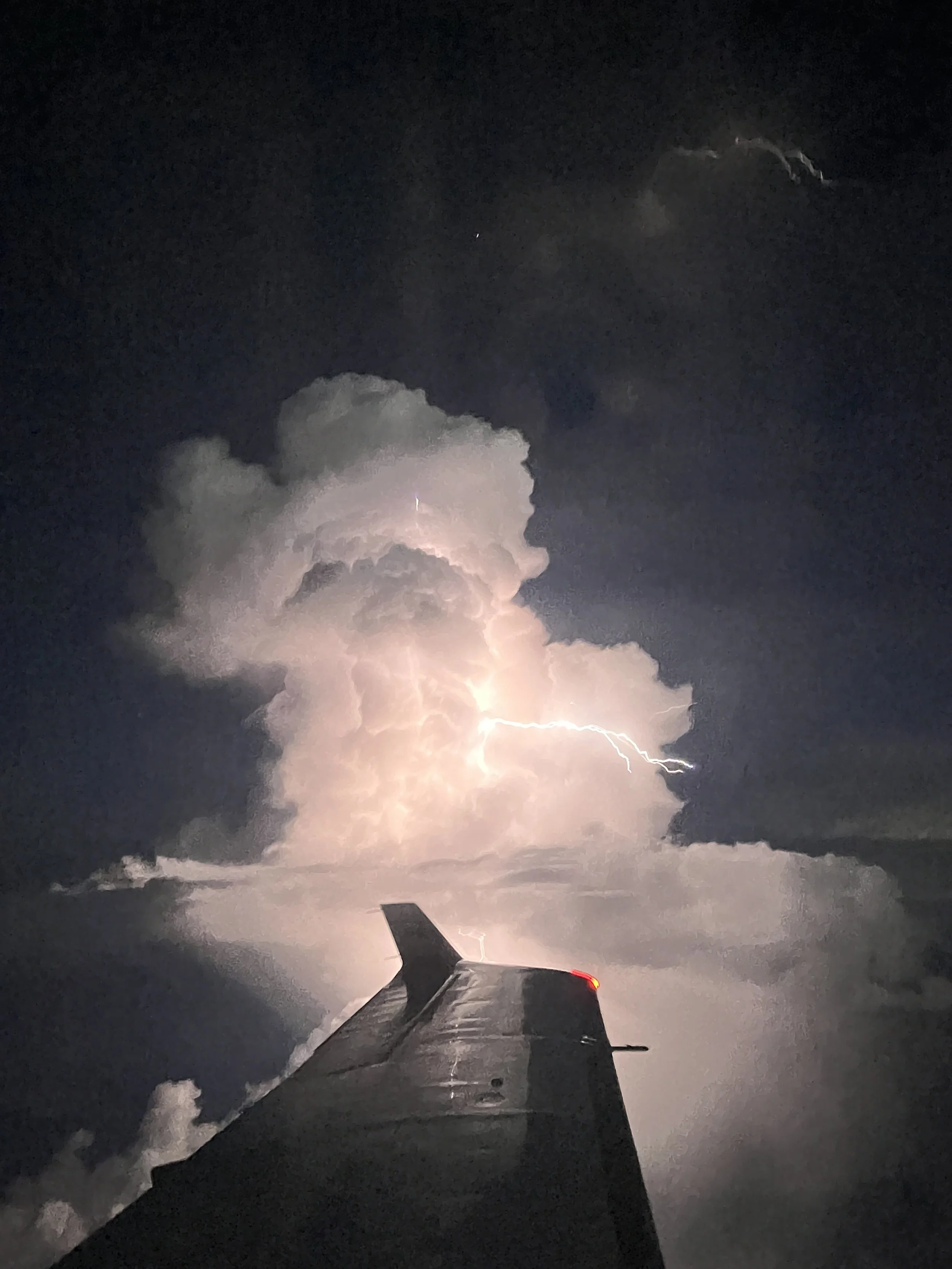
A turbulent Beginning
A Turbulent Beginning
It started with three simple words: Let’s just go.
We weren’t excited about a 2 a.m. flight back to podunk Wisconsin—we just wanted to get home. And honestly, this is often how it starts. What should have been routine turned into something else entirely. A flight that shook more than the aircraft. A moment that quietly planted the seed for a burnout that would take years to fully reveal itself.
At the time, I didn’t know that.
I only knew how to push forward—because that’s what I’ve always done.
The Flight That Changed Everything
The turbulence hit hard—and it didn’t let up.
The plane dropped and lurched without warning. My body was thrown around the cabin, even while strapped in. My head hit the ceiling. My muscles stayed locked, bracing for whatever came next. I remember my breathing—short, shallow, completely out of sync with everything around me.
There was no rhythm to it.
No pause.
Just constant motion.
And then the worst realization set in: I couldn’t move. I couldn’t reach my patient. I couldn’t do the one thing I was there to do—help.
Time stretched in a way I still can’t fully describe. Control didn’t disappear all at once; it slipped away slowly. The fear wasn’t loud—it was heavy. It sat in my chest and stayed there.
So I cried.
I cried in a way that surprised even me. I was a flight nurse—calm, capable, used to pressure—and I was sobbing uncontrollably. Hot, wet tears mixed with sticky, snotty sobs. My face was a mess, my body shaking, and no amount of tissues could pull me back together.
Eventually, we landed. Late.
A flight that should have taken less than an hour took almost two.
But we were on the ground.
I thought that would be the end of it.
What Stayed With Me
That flight stayed with me for years.
The sharpness faded, but it never fully left. I kept flying. I kept showing up. I kept proving—to myself more than anyone—that I could do this. Being a flight nurse became more than a job; it became who I was.
I took on projects. Leadership roles. Extra responsibility. I told myself I was growing, contributing, becoming stronger.
Turbulence still rattled me. Sometimes it broke me down completely. But I pushed through, because this was my identity—and I wasn’t ready to question it.
When Things Began to Shift
Over time, leadership changed. New managers came in, each with their own style and priorities. Expectations evolved. Communication wasn’t always consistent, and the pace of change required frequent adjustment.
I tried to adapt. I always do.
When my husband was hospitalized for two weeks, it became impossible to ignore how thin I’d stretched myself. I stepped away from leadership, hoping it would finally give me some space—some room to breathe.
It didn’t.
I had made myself so valuable that the calls didn’t stop. The expectations didn’t really shrink. And I remember thinking: I quit leadership—why do they still need me for everything? I just wanted to be a flight nurse and go home at the end of the day.
Eventually, I reached my limit and transferred bases, hoping a different environment might help me reset. For a while, it did. I was more intentional about saying no and refusing to take on more, believing that pulling back would help me find my footing again.
But more transitions followed.
New leadership.
New structures.
A continued need for flexibility.
It took a surprising amount of emotional energy to keep recalibrating.
Still, I stayed.
The Cost of Holding It All Together
I wore endurance like a badge of honor.
The headaches. The stomach issues. The inflammation. The weight gain. The anxiety. The brain fog. I told myself it was normal—stress, hormones, aging. Anything but what I already suspected.
I didn’t want to admit the truth, because that meant asking a harder question:
Who am I if I’m not a flight nurse?
So I pushed harder. I told myself resilience meant surviving no matter what.
But the body doesn’t forget.
The Moment I Couldn’t Ignore
Last fall, during the first bad-weather flight of the season—nothing extreme, just light chop and light icing, nothing dangerous—I felt it again.
I started crying the same way I had years earlier. I hunched over, closed my eyes, and tried to pretend it wasn’t happening.
But it was.
I was having a flashback—and that scared the shit out of me. I had never experienced a true flashback before, and I don’t care to ever have one again.
The situation itself wasn’t dangerous.
But my nervous system didn’t care.
It was exhausted.
That’s when I finally understood: this wasn’t about one flight. It was about years of cumulative stress—clinical intensity, constant adaptation, and never giving myself permission to stop and ask how I was really doing.
It was time to name it.
Burnout.
Choosing Something Different
I still fly—for now. But once I acknowledged what was happening, something shifted. I stopped fighting myself. I started listening.
I’m slowly climbing out of a hole that took years to dig.
And while I had been waiting for the “right opportunity,” I realized something important: there isn’t one waiting for me. I need to create it—on my terms.
My work will not define me. No matter how much I care, no matter how much I’ve invested. I will take the trips. I will go on the hikes. I will build a life that feels full and meaningful because I choose it to be.
I became a nurse to help people. That’s why trauma nursing always pulled me in—because we’re fixing things in real time, not just managing symptoms. But even meaningful work can become overwhelming when the pace never slows.
This space exists because I’m choosing a steadier path. One that values awareness before collapse. One that supports the body and mind before they reach a breaking point.
I’m not leaving nursing.
I’m changing how I relate to it.
Why You’re Here
Hi, I’m Missi.
I created this space as a place to slow down, breathe, and reconnect. What starts as a blog will grow into something more—a multi-layered approach to wellness that honors the whole person.
I’m not a medical doctor, and I don’t diagnose, treat, or give medical advice. But I do offer tools, education, and lived experience to help you explore a more holistic way of living—one that supports your nervous system, your body, and your sense of self.
This space is safe.
It’s honest.
And I’m really glad you’re here.